Mageia 2: release cycle, support and planning

We’ve had discussions in the Mageia community, to decide about the Release cycle of future versions of Mageia. We started with some proposals and everybody was able to comment and discuss.

The outcome of our discussions: the release cycle for Mageia will be 9 months. We think it’s a well-balanced choice, providing an up-to-date distribution that’s also stable. It should also give us enough time to build the specifications,  develop, package, innovate and finalize it.

Each Mageia release will be supported for 18 months. We will have a global review of our resources before next release to check that we can still provide support according to our first plan. If all is going well, then we will think about releasing a LTS (Long Term Support) version every 18 months, to be supported for 3 years.

Development planning for Mageia 2 has tried to take into account all the comments coming from our Mageia 1 post-mortem. Here’s the timeline:

  • Alpha 1 : 16/11/2011
  • Alpha 2 : 14/12/2011
  • Beta 1 : 20/01/2012
  • Versions freeze : 06/02/2012
  • Artwork freeze: 10/02/2012
  • i18n freeze: 10/02/2012
  • Beta 2 : 14/02/2012
  • Releases freeze : 06/03/2012
  • RC : 09/03/2012
  • Final Release: 04/04/2012

Work has started already – you can have a first look at the technical specifications.
Posted in Uncategorized | Tagged , , , | 27 Comments

Mageia at LSM 2011

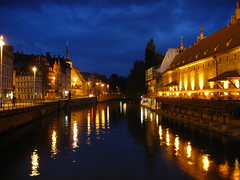
Strasbourg by night

CC-BY-SA Some rights reserved by .tungl

The Libre Software Meeting, now in its 12th year, is an annual French gathering of Free Software enthusiasts. Over 4 or 5 days it features several conferences and discussions about a wide range of topics, as seen on the schedule. LSM changes location each year; this year’s event is in Strasbourg in the east of France from the 9th to the 14th of July, and Mageia people will be speaking about our project.

Anne will be speaking at the “Forker et construire en 10 leçons” session on Tuesday morning, in the “Community” track about the project as a whole, basing her presentation on the one she did for LinuxTag. She’ll be talking about what we’ve learned during Mageia’s first year, and sharing our discoveries with our fellow community members.

Our second presentation, by yours truly, will be in the afternoon in the “System Administration” track; this one is about the inner workings and gory details of the infrastructure of a Linux distribution. I’ll be offering a unique view under the hood of the
project, talking about the way we tried to create a sustainable and transparent team of volunteers.

Both talks will be in French.

Any self-respecting Free Software event would be incomplete without an association village. LSM’s attractiveness also comes from the variety of booths; they range from the usual Free systems and software such as Debian, GNOME, etc to associative ISPs like FDN, regional LUGs and others – see here for the complete list.

We will be present to show Mageia to visitors – and to discuss it all with passers-by, Mageia users and other community members. Some of us have been here before under other  names in previous years, so we’re well prepared!

Since one of our core values is co-operation with others’ projects, we have decided to share our booth with the French Fedora Ambassadors and the members of the French OpenSUSE community, to share the logistics of taking care of a booth. For example, this will let everyone go to eat with the assurance that someone is watching over our stuff, or to use one car instead of duplicating our efforts.

We’d really like to see you there – LSM is a great conference with something for everyone, and we’d love it if you come to our presentations, and drop by our booth to chat with Mageia people.

See you at LSM!

Posted in events | Tagged , , , , | 5 Comments

They make Mageia: Jérôme Quelin

Now that things are well on their way and that Mageia 1 is there, it’s time to discover some more about the persons that are making this a reality.

Today, this is about Jérôme; thanks to him for being the first!

Jérôme presents POE

CC By-NC-SA, Some rights reserved by @rgs


Who are you? Where do you live? What do you do for a living?

I am Jérôme Quelin (aka jq), 34 years old. I am married and a father of a little boy. We are living in Lyon, France, where I’m working at Renault Trucks.

How/where do you contribute to Mageia? what else do you contribute to, and why?

I am the maintainer of Mageia’s Perl stack. This consists of Perl itself, and of all the CPAN modules available within Mageia.

Note: Perl is a high-level programming language in which applications and systems can be written; a lot of Mageia relies on this.

I am also a Perl developer, owning a few modules on CPAN and contributing to some others.

So, what’s special about Perl in Mageia? what can one do with it? what’s available?

Perl has nothing fancy on Mageia, it’s usually the latest one which is available (note: Mageia 1 ships with Perl 5.12.3 since 5.14.0 was too late in our release cycle).

But Mageia shines on the number of CPAN modules available at the tip of your fingers: around 2,500 distributions, accounting for ~17,000 modules. That’s a little bit less than 20% of CPAN, but that’s quite huge! I don’t know what the other distributions are shipping, but I think it’s a lot less.

All the latest & greatest modules are in: Moose, POE, Dancer, Catalyst, Dist-Zilla, etc. – you name it.

All those modules are of course updated on a regular basis, integrated with the system libraries… and sometimes even fixed to make them compile (patches & bug reports of course sent upstream).

Mageia also has a great tool to maintain the cpan modules up to date: magpie. It shouldn’t be too hard to add support for other distributions, if you’re interested.

For instance, to install a given Perl module, just do:

$ sudo urpmi 'perl(Foo::Bar)'

and if the module is missing, you can open a bug report and we’ll work on packaging it for you.

Posted in Uncategorized | Tagged , , , , , , , , , , , , , | 1 Comment

Security, Updates and More – Oh My!

From Stew Benedict (aka stewb)

If you’ve been using Mageia 1, you may have been wondering where all the updates are. It’s customary to get quite a few updated packages in the first month or so of a new distribution to correct bugs and address security issues. Don’t worry, we’ve been working on that too.

As a new organization, and a community driven one, we first had to work out how to do the updates.  While some of us have experience from previous lives, we weren’t entirely satisfied with the old process and wanted to make sure our new community of users and packagers had an input into how we’ll do things.

So, after discussion and some work behind the scenes for the mechanics of issuing an update, we have now have a process where the security team, the QA team, and the packager maintainer will all work together to build, test, and issue new updates. If you use MySQL, you should have seen the first update appear in the last couple of days and more are in the pipeline. Policies managing the process have been added to our wiki, and as we work through the first few packages we’re refining and documenting the process more thoroughly.
For Mageia 1, we have a special exception for updates. So called “missing” packages that weren’t part of Mageia 1 but are in our sister distribution, can be issued as an update, rather than a backport, provided they pass the QA process.

Hey, What About Backports?

We haven’t forgotten backports either, but we can’t do everything at once :). The discussions have just started on the development mail list as to how we will handle backports. Sometimes backport repositories have a somewhat bad reputation, and we want to fashion a process and policy such that ours can avoid being discounted as “don’t use those”. If you want to get involved in fashioning how they will work, please subscribe to the mail list and voice your opinion.

A nice summary of the community discussions

How You Can Help

We want to be the best distribution ever for our users, but we need your help. We use Bugzilla as our tracking tool to work packages through the update process. If you find a bug or are aware of a security issue, please open a bug (after checking if one doesn’t already exist) in bugzilla. The more concise the information you provide in the bug (patches, links to fixes or discussions of the issue), the more quickly one of our packagers will be able to issue an updated package to QA for testing so that you can get the fix.

Thanks For Your Patience and Support

We know some of you have been asking about updates and we haven’t forgotten. We’d like to think we cleansed a lot of bugs before issuing Mageia 1, but there are always a few more we’ve missed. Now that the process is in place for updates we hope to provide fixes in a timely fashion.

Posted in Uncategorized | 17 Comments

New clothes for Mageia: preview of ARM port is now available

We spoke about this some weeks ago, it’s now done! Thanks to Arnaud Patard (aka rtp) the Mageia ARM port is available for a first preview. The port’s code name is “arm eabi”, as a future port should be “arm eabihf”. It will use the hard float feature of Cortex family processors.

Where can I find it?

Because it’s a technical preview, for now, you will find it only on a specific mirror – thanks again to Arnaud.

ARM content

Again, because it’s a preview, not all Mageia packages are available for now. The preview has 1,382 SRPMS and 3,909 RPMS (excluding debug packages). The global ARM tree is about 9GB. More details:

  • graphical environments: complete GNOME, minimal KDE
  • desktop applications: Mozilla Firefox, LibreOffice is on the way
  • basic network services: httpd, named, LDAP, PostgreSQL, MySQL…
  • development: Python, Perl, PHP, C, C++
  • Mageia tools: installer, drakxtools, Mageia Control Center
  • multimedia: audio support; video is not ready as it works for now by default on framebuffer

Proprietary video drivers are provided by manufacturers. For now the focus is not on free video drivers as they are not accelerated so it would not improve anything vs framebuffer drivers.

How was it built

ARM port started on a distribution bootstrap based on a Mandriva chroot. The build was  done using iurt: it took a bit longer but it helped a lot to fix some missing dependencies and various packaging problems. So the situation is now much cleaner.

More than a hundred packages were fixed because of compilation problems. They can now be rebuilt either for  i586 / x86_64 or arm. For now everything is available in SVN except some of them that still need to be committed.

What hardware is compatible?

This ARM port supports the Kirkwood series from Marvell. Most frequent are: Open-RD, computer plugs (SheevaPlug, GuruPlug). It runs also in qemu as a virtual machine.

Installing in qemu

You will find some short documentation explaining the main steps to make this work. You will find also a pre-built qemu image.

Still lots of things to be done!

This first release has been built using Mageia tools but not integrated into the Mageia build system yet. This is one of the main items on the current TODO list. A PandaBoard is waiting now to be installed in the Mageia build system so that a parallel build can be done in ARM when a package is submitted to the build system. The hard part will be managing different ARM machines using different socs meaning different kernels.

This too opens up a whole new range of possibilities for the Mageia platform: new hardware, new use cases, new applications.

You can get in touch with Mageia ARM developers on #mageia-dev on Freenode IRC and the mageia-dev mailing-list.

Posted in Uncategorized | Tagged , , , , , , , , , , , | 11 Comments